Custom jewelry packaging and display — from concept to production



The Soft Layer Inside Your Jewelry Box Matters More Than You Think
When people choose jewelry packaging, most of their attention goes to the outside of the box – what paper it is, what color, whether the logo is foil stamped or embossed. The lining, that soft pad inside, is usually treated as a standard inclusion. Few people stop to ask what material it is or whether it might scratch the jewelry.
But if you ask a jewelry brand owner what packaging issue worries them most, the answer is rarely “the box cracked.” More often it is “the lining scratched my jewelry” or “the cutout didn’t fit, so the necklace moved around inside and arrived as a tangled mess.” The lining is the only part of the packaging that directly touches the jewelry. Its material, softness, and the precision of its cutouts determine how safely the jewelry is stored and transported, and they shape the customer’s first tactile impression when opening the box.
There are four common types of jewelry box linings on the market: velvet, flocking, foam or EVA cutouts, and molded pulp, which has gained more attention in recent years due to environmental trends. Each material has its own strengths and weaknesses. There is no absolute “best” – it all depends on what kind of jewelry you have and how you plan to use the packaging.
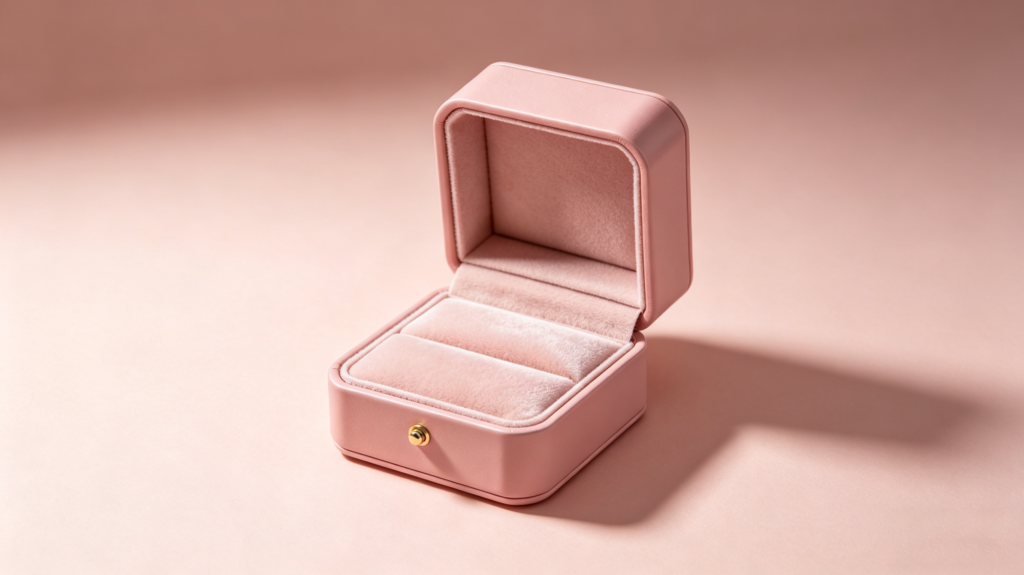
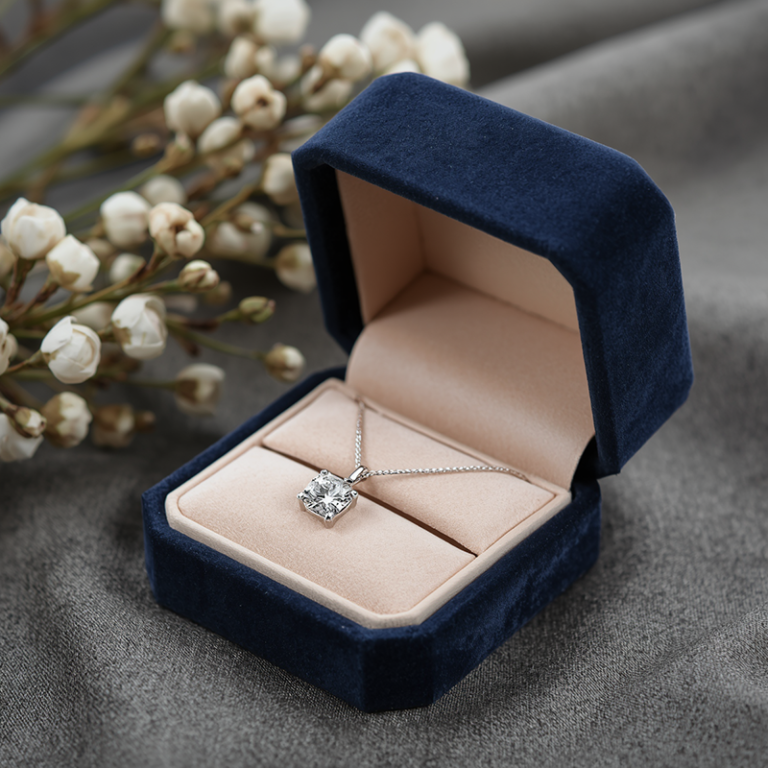
Velvet is the material most people are familiar with. Its surface has a uniform pile that catches light subtly, creating a sense of depth. The biggest advantage of velvet is its light absorption – it reduces background reflection, making gemstones appear brighter. At the same time, it feels very soft to the touch, which gives customers the subconscious impression that the brand is thoughtful and caring. However, velvet has a problem that is hard to ignore: under sustained pressure, the pile will permanently compress and leave a dent. For example, if a ring sits in the same spot for several months, a noticeable depression will form in the lining. Velvet also attracts dust, lint, and skin oils very easily. If it is used in an open display where customers constantly pick up and put down pieces, the velvet will become dirty quickly and is difficult to clean. For this reason, velvet is better suited to gift boxes, engagement ring packaging, and other situations where the jewelry is not handled frequently, rather than high‑traffic retail counters.
Flocking looks a bit like velvet, but it is completely different. Flocking is a process where very short fibers are electrostatically adhered to a surface such as plastic, paperboard, or foam. Many phone case liners and budget‑friendly jewelry trays use flocking. To the naked eye, it can be hard to tell flocking from velvet, but the moment you touch it, you know the difference – flocking feels harder and drier, lacking the plush cushioning of velvet. The cost of flocking is about one‑third to one‑half that of velvet. Because it has no fabric seams, it can be molded into complex, one‑piece shapes. The downside is that over time the fibers may shed, especially if the quality is poor, exposing the plastic or paperboard underneath. The perceived quality is noticeably lower than velvet. Flocking is suitable for affordable fashion jewelry, fast‑fashion brands, or situations where you need a custom‑shaped liner but have a tight budget.
Foam and EVA cutout linings offer the highest level of protection. A piece of polyurethane foam or EVA foam has cavities cut or routed to match the exact shape of the jewelry, so each piece sits snugly inside, like sleeping in a custom‑made bed. The biggest advantage of this type of lining is that it can be precisely customized – you send the actual jewelry or accurate dimensions, and we create cutouts that hold the pieces firmly. During transport, the jewelry does not move, does not rub against other pieces, and is far safer than in generic linings. The downside is that foam and EVA themselves do not look luxurious; they usually need to be covered with velvet or fabric to improve the presentation. Also, cutouts require tooling or laser cutting, so the minimum order quantity and setup cost are slightly higher than for generic linings. However, for irregularly shaped jewelry, e‑commerce orders that go through rough shipping, or multi‑piece sets, foam cutouts are a very reliable choice.
Molded pulp is a newer option that has risen in popularity because of the push for sustainability. It is made from recycled paper or sugarcane bagasse, pressed into shape using a mold. The surface has a natural fiber texture, usually light grey or off‑white, and resembles a high‑grade egg carton. The biggest selling point of molded pulp is that it is 100% recyclable and compostable, meeting environmental regulations such as those in the European Union. It is particularly suitable for brands that emphasize sustainability. The cost is low – slightly higher than flocking but lower than velvet – and it can be molded into fairly complex shapes, such as a winding groove for a long necklace. But it has clear drawbacks: the surface is rough, and if it directly touches high‑polish metal, it may leave fine scratches. This can usually be prevented by adding a thin layer of tissue paper as a barrier. Molded pulp is not waterproof and softens when wet. Its color range is limited to natural fiber tones – you cannot get the rich color variety that velvet offers. Molded pulp is best suited for silver jewelry, nature‑inspired collections, single‑use shipping packaging, or any situation where you want to convey an honest, understated look rather than overt luxury.
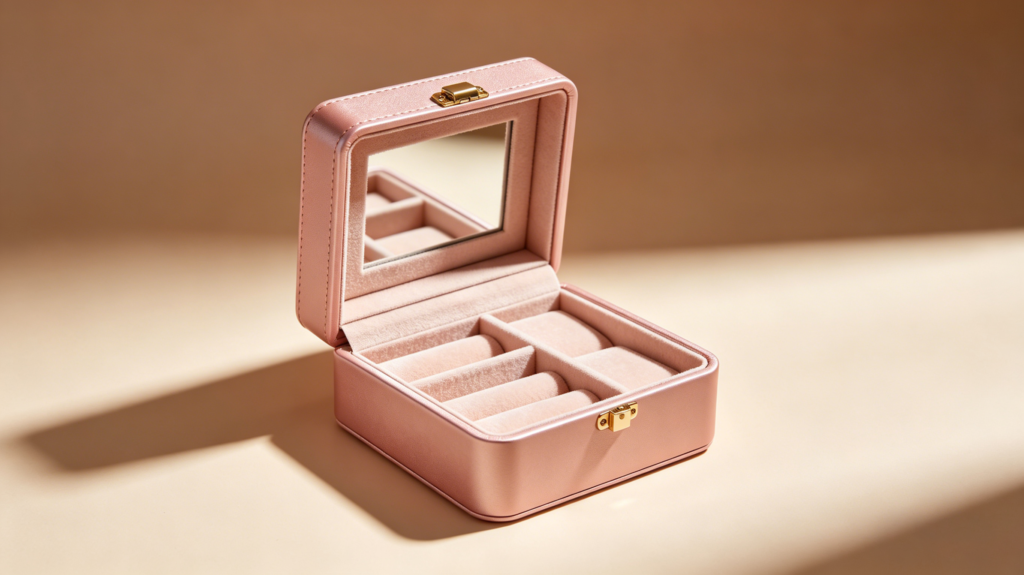
So how should a brand decide which lining to choose? If your top priority is a luxurious look and great photography appeal, velvet is the way to go. If your main goal is protecting the jewelry during shipping, foam or EVA cutouts are the most reliable. If you need to control costs and use large volumes, flocking can meet the basic requirements. If your brand is pursuing eco‑certifications or your primary market is Europe, molded pulp is worth serious consideration. And if you are still unsure, choose black velvet – it works with almost any jewelry and is the least likely to go wrong.
When you select a jewelry box, take a moment to ask: what is the lining made of? Is it velvet or flocking? Are the cutouts generic or custom? A good lining does not have to be expensive, but it does need to match the character of your jewelry and the way you plan to use it. After all, the lining is the bed for your jewelry – if the bed is uncomfortable, the jewelry does not rest well.